
No — don’t assume the fireplace is ready just because it burned fine last winter. A chimney inspection before winter in Harbor City is what confirms the flue is clear, the damper opens the way it should, and nothing has cracked, nested, or shifted in the months since your last fire. Pacific Fireside runs these inspections all fall for Harbor City homeowners, and most of what we find is cheap to fix in October and expensive in December.
Here’s what that inspection actually covers: the firebox, damper, smoke chamber, flue, crown and cap, and the chimney’s exterior — the places where small summer problems turn into winter hazards. In this guide, you’ll learn exactly what a technician checks, which warning signs mean you shouldn’t light a match yet, and how to time your booking so you’re warm and ready before the first cold snap hits the South Bay.
Can You Safely Light the First Fire of the Season in Harbor City?
Most years, probably. Most fireplaces don’t fail dramatically — they fail quietly, one small problem at a time. The question isn’t whether the fireplace lights. It almost certainly will. The question is whether the smoke goes up and out instead of back into your living room.
Before you light anything, do your own quick fireplace safety check before the first fire in Harbor City. Open the damper and shine a flashlight up the flue, looking for bird nests, leaves, or anything that doesn’t belong. Sniff the firebox for a heavy tar smell — that’s creosote, and thick creosote is a chimney-fire risk. Check the walls around the fireplace for new water stains; a stain that wasn’t there in spring means water is getting in somewhere above.
Then light a small test fire — kindling and one log, not a full load. The smoke should rise and draw upward within seconds. If it rolls out into the room, the damper may not be opening fully or something may be blocking the flue. If you smell smoke in rooms far from the fireplace, stop — that can signal a cracked flue liner leaking smoke into the framing. A test fire tells you something useful, but it can’t show you the flue’s interior or the crown. That’s where a professional inspection picks up.
Pre-Season Chimney Checks for Harbor City Homes
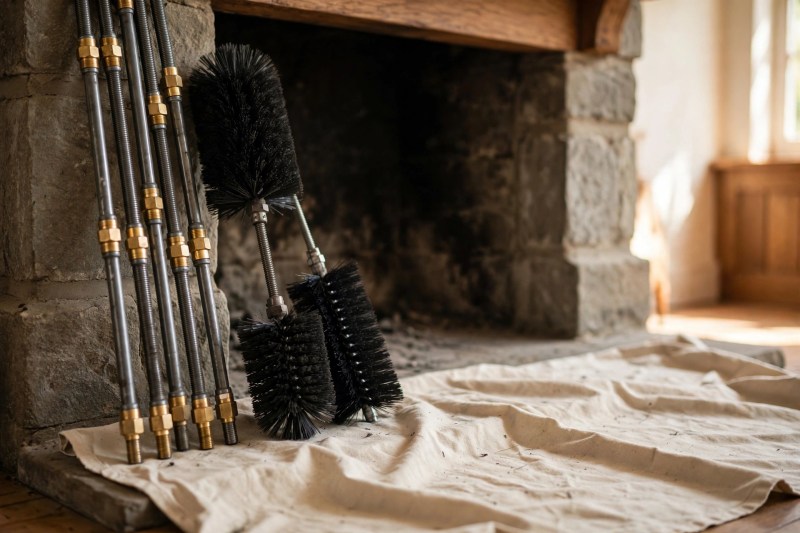
Harbor City sits close enough to the water that chimneys here age differently than inland ones. Salt in the coastal air is hard on masonry and metal alike — mortar joints that looked fine in May crumble faster after a summer of marine-layer mornings, and rain caps corrode quicker here than ten miles inland. During a chimney inspection in Harbor City in October, we pay extra attention to the crown, the mortar, and every metal part. The ocean reaches those first.
Many Harbor City homes also share chimney chases or have flues that run shorter than you’d expect, and shorter flues draft less aggressively. A weak draft in September becomes a smoky living room in November, when cool marine air sits heavy at the flue opening. Neighbors in Torrance, Wilmington, and San Pedro hear the same advice: an annual chimney inspection in Torrance or anywhere in the South Bay isn’t caution for its own sake. These homes share construction patterns and weather, and the same problems show up on all of them.
Harbor City’s first real rains usually arrive in October or November, and rain is a chimney inspector’s truth serum. A leak that hid all summer shows itself the moment water runs down the flue. A fire on top of a wet, soot-loaded flue is a bad combination. October is the window — before the rain, before the cold.
What a Chimney Inspection Before Winter in Harbor City Looks Like, Start to Finish
A proper inspection follows a sequence, and knowing it helps you tell a thorough job from a quick glance.
It starts inside, with questions. How often did you burn last season? Any smoke issues, odors, or water stains? For a gas fireplace, did the pilot behave? Those answers steer where the technician looks first. Then come drop cloths over the hearth and nearby flooring — a careful crew protects your room before touching the fireplace.
The firebox comes first: brick or refractory panels checked for cracks and spalling, mortar joints probed, grate and andirons noted. The damper gets opened and closed several times. It should move freely and seal reasonably well when shut. A rusted or stuck damper is one of the most common finds in a seasonal inspection, and it directly affects whether your fire draws.
Then the technician works upward. The smoke chamber is checked for gaps in the mortar parging — rough, gappy chambers create turbulence that pushes smoke back down. The flue liner is examined along its full length, often with a camera dropped from the top, looking for cracked tiles, missing mortar between tiles, glazed creosote, and offsets that could trap smoke. This is the part you can’t do yourself. A camera sees everything.
On the roof, the inspection finishes: the crown for cracks, the cap for rust and secure attachment, the flashing where the chimney meets the roof, and the exterior masonry for spalling and leaning. A missing or damaged cap is usually the single highest-value fix — a cap keeps water and animals out, and both cause most of the expensive chimney damage we see.
Get your findings in writing, ideally with photos. A report that says “everything’s fine” with no specifics is no better than a handshake. Pacific Fireside is a licensed contractor (CA license #1105265), and licensed chimney work should come with documentation you can keep — useful for your records and essential if you ever sell the home.
Safety Issues That Show Up After Months of Disuse
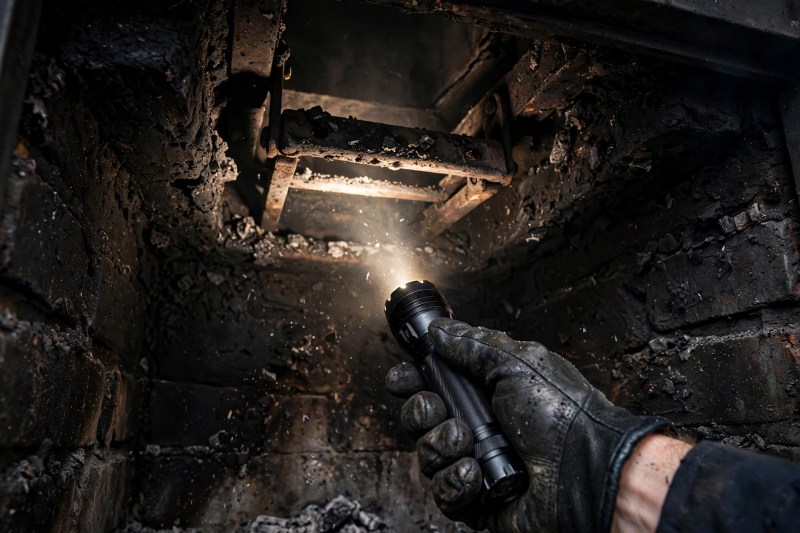
Chimneys don’t improve while they sit. Here’s what an idle summer actually produces, ranked by how much it matters.
Creosote buildup. Every wood fire deposits creosote, and it doesn’t burn off on its own. Thin soot is normal. Thick, shiny, tar-like layers — stage-three glazed creosote — can ignite. The National Fire Protection Association recommends annual chimney inspection, and when the inspection finds heavy buildup, a sweep comes before the first fire, not after.
Blockages. Birds and raccoons treat open flues as real estate. A nest near the top of the flue chokes the draft and pushes carbon monoxide back into the house. CO is colorless and odorless; a blocked flue on a cold night is genuinely dangerous. This is also why a cap matters — it ends the wildlife problem permanently.
Cracked or deteriorated liners. Flue tiles crack from thermal shock and age. A cracked liner lets heat and smoke reach the wood framing around the chimney, and house fires have started exactly this way. The damage is invisible from the fireplace opening, which is why the flue camera matters.
Water damage from the crown down. Hairline crown cracks let rain in, and rain plus soot creates acidic moisture that eats mortar from the inside. If you’re seeing a chimney leak after rain in Harbor City — stains near the fireplace, dampness in the firebox, white efflorescence on exterior brick — say so when you book. Water damage never stays small.
Damper and door problems. Rust, warping, and stuck dampers are routine after a humid summer near the coast. A damper that won’t close wastes heat all winter; one that won’t open is a smoke emergency. Gas fireplace owners aren’t exempt — our gas fireplace repair work in Harbor City regularly starts with a damper or venting issue the homeowner noticed on the first cold evening.
Booking Around the Fall Rush: Timing and What to Ask
Chimney companies in the South Bay get busy fast. The pattern repeats every year: quiet in September, slammed from the first cold weekend in November through January. Booking your inspection in October lands you in the sweet spot — mild scheduling, and time to fix whatever turns up before you actually need the fire.
When you call, ask three questions. First: what level of inspection do you perform? The Chimney Safety Institute of America describes three levels; a pre-season check with no known problems is typically Level 1 or 2, but ask anyway — it tells you whether the company thinks in standards. Second: will I get a written report with photos? If the answer is vague, keep shopping. Third: is this an inspection or a sweep? An inspection diagnoses; a sweep cleans. A company that pushes a sweep before looking is selling, not inspecting.
Buyers and sellers should time this differently. A real estate chimney inspection in Torrance or Harbor City, done during escrow, prevents the worst surprise: a fireplace flagged at the final walkthrough. If a transaction is anywhere on the horizon, book before the contingency clock starts, not after.
And if the inspection finds a missing or rusted cap, don’t defer it — chimney cap installation in Harbor City is a small job that prevents the biggest category of winter chimney damage. Fix the entry point first; everything else lasts longer.
FAQs About Chimney Inspections in Harbor City
How often does a Harbor City chimney need an inspection?
Once a year, before burning season. The National Fire Protection Association recommends annual inspection of chimneys, fireplaces, and vents, and coastal homes — salt air, early rain, shorter flues — shouldn’t skip years. Burn wood often? Add a mid-season creosote check.
Do I need an inspection if I have a gas fireplace?
Yes. Gas burns cleaner than wood, but it still produces moisture and combustion byproducts that corrode vents and flues, and gas units have their own failure points: faulty thermocouples, blocked vents, pilot problems. The chimney structure needs checking too — crowns crack and caps rust regardless of what’s burning below. Our main Pacific Fireside page covers the gas and wood services we handle across the South Bay.
Can a chimney leak show up during the first rain?
That’s exactly when leaks show up. Summer heat opens hairline cracks in crowns and flashing, and October rain pours through them. Watch for dampness in the firebox, stains near the fireplace, and a musty smell when the fireplace is closed. Spot any of those? Book before the first fire — burning on a wet flue drives moisture deeper into the masonry.
What should I do before the technician arrives?
Clear the hearth and remove fragile items from the mantel. Don’t clean the fireplace yourself first — the soot pattern tells the technician how it’s been burning. Keep prior inspection reports handy for comparison, and write down anything you’ve noticed: smoke behavior, odors, stains. Small observations help the diagnosis.
Conclusion: Get the Inspection Before You Need the Fire
A chimney inspection before winter in Harbor City is the simplest way to make the first fire of the season a safe one. An hour of inspection in October catches the creosote, blockages, cracked liners, and water damage that a summer of disuse leaves behind — and every one of those problems costs less to fix now than in January.
If you’re ready to book, call Pacific Fireside at 562-222-3249. We’re at 24404 S Vermont Avenue, Suite 307C, Harbor City, CA 90710, serving Harbor City, Torrance, Wilmington, San Pedro, and the surrounding South Bay.

