
An old masonry fireplace can burn a whole evening of wood and barely warm the room. A fireplace insert changes that: it’s a sealed steel firebox that slides into your existing fireplace opening, turning a drafty firebox into a real heat source. Planning a fireplace insert installation in Harbor City? Pacific Fireside can assess your fireplace, recommend gas or wood, and install the unit to code.
Most homeowners in Harbor City face the same question before anything else: gas insert or wood insert? The answer depends on your chimney condition, how you heat the house, and what kind of work your family is willing to do. This guide walks through how each option works, what installation involves, the safety rules, and when an insert is — or isn’t — the right call.
Gas or Wood: Choosing the Right Insert for Your Harbor City Fireplace
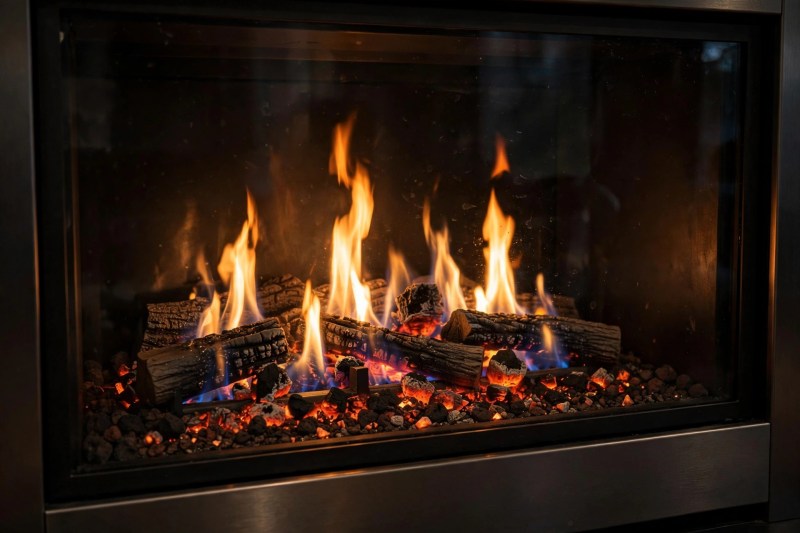
A gas insert is a sealed combustion unit with a glass front, typically vented through a direct-vent coaxial pipe or an existing flue. A wood insert is a heavy steel or cast-iron firebox that burns cordwood at far higher efficiency than an open fireplace. Both fit inside your current fireplace opening, so the masonry face you already have stays. If your project is closer to a full fireplace remodel in Harbor City, the same assessment applies, with more decisions.
Gas wins on convenience. Push-button start, a thermostat, no wood to haul, no ash to clean. For a household in Harbor City where the fireplace runs a few evenings a week through the cooler months, gas usually gets used more — because using it takes no effort. Wood wins on heat independence. A well-made wood insert produces strong, long-lasting heat without relying on the gas line, which matters during outages or when you’re heating a larger space.
Honestly, the venting situation often decides for you. A damaged chimney or an existing gas line nearby makes gas the simpler path; a sound chimney makes wood the stronger heater. A wood to gas fireplace conversion is the most common insert project we see in Harbor City, and the on-site assessment sorts out your best route before you spend a dollar.
How a Fireplace Insert Installation Actually Works, Step by Step
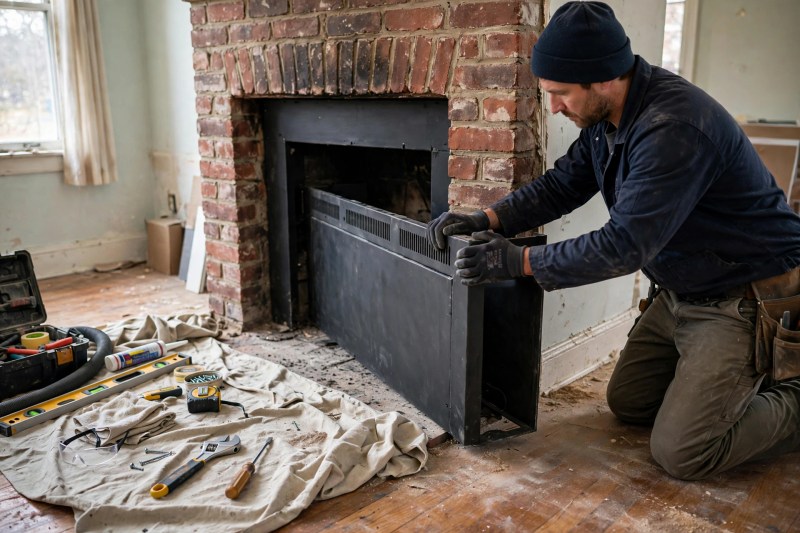
Installation isn’t a drop-in job. A properly done fireplace insert installation in Harbor City follows a sequence that protects your house and keeps the unit under warranty.
- Inspection and measurement. We measure the fireplace opening, depth, and height, check the condition of the flue liner, look at the hearth and surrounding clearances, and confirm there’s a proper foundation. The unit has to fit the opening — not the other way around.
- Fuel and venting plan. For gas, we locate the gas line route and choose between a direct-vent system and venting through the existing flue with a liner. For wood, we check the flue and plan a stainless liner sized to the insert.
- Permits and utility coordination. Gas work in Los Angeles County means permits and, when a new gas line is involved, coordination with the utility. This is licensed work, and it’s done by licensed installers.
- Installation day. The old damper gets removed or disabled, the liner goes in, the insert is set, sealed with insulation around the face, and all connections are made.
- Testing and walkthrough. We fire the unit, check draft, test gas connections for leaks, confirm clearances, and walk you through lighting, adjusting, and maintaining it.
Sizing, Venting, and the Combustion Air Question
An insert that’s too large for the firebox overheats the surround; one that’s too small can’t heat the space it’s meant to serve. The firebox opening dictates the maximum unit size, and the room’s volume — not just its floor area — dictates how much heat output makes sense. A tall-ceiling living room in an older Harbor City ranch needs a different unit than a compact condo fireplace off Vermont Avenue.
Combustion air matters more than most people expect. Modern inserts are sealed from the room, pulling combustion air from outside or from the vent system rather than from your living room. That keeps the draft predictable and avoids pulling cold air through every gap in the house. With gas, a direct-vent system — one coaxial pipe bringing in outside air and exhausting outside — is the cleanest setup for a direct vent fireplace install, in Harbor City or San Pedro alike. With wood, the insert relies on the liner for draft, and the liner has to be the right diameter and height. Get the venting wrong and you get smoke roll-out or a sluggish fire. This is the part of the job where measurements matter most.
What Happens on Installation Day
Plan on most of a day for the install, longer with a new gas line or a tall flue reline. The firebox gets cleaned out — old grates, ash, and debris. For gas, the gas line is routed to the firebox and pressure-tested before any connection is made. For wood, the stainless liner is lowered down the flue and connected to the insert’s flue collar.
The insert slides in, gets leveled and anchored, and the gap between the unit’s faceplate and the fireplace opening gets sealed with high-temperature insulation so room air can’t draft behind it. Then the first burn: we light it, watch the flame pattern or the draft, check for smoke issues, and verify the draw. You’ll get a walkthrough of the remote, blower settings, and the break-in procedure for a wood unit (a few gentle fires first — the paint needs to cure).
Venting and Clearance Rules That Matter in Harbor City Homes
Inserts don’t bend the rules — they still live inside code requirements. The unit needs proper clearance from anything combustible: mantels, wood framing, flooring in front of the hearth. Each manufacturer publishes exact numbers, and the installer follows them, not approximations. If your mantel sits too low for the unit you want, that’s a decision point, not a shrug.
A wood insert demands a flue liner matched to the unit. Burning wood through a deteriorated clay tile liner is one of the riskier setups we see: heat and creosote reach masonry that can’t take it, and that’s how chimney fires start. The liner keeps the gases hot enough to draft, insulates the flue, and reduces creosote. It is not optional equipment.
Gas has its own non-negotiables. The gas connection gets leak-tested, the vent terminates where exhaust can’t re-enter the house, and the sealed glass front stays sealed — a cracked or removed glass front on a direct-vent gas unit isn’t a cosmetic issue. Carbon monoxide awareness applies to both fuel types: a working CO detector in the room covers a real risk for a small price. Our installers are licensed (CA license #1105265), and gas work in this county runs through the permit process, which exists to catch the things that fail quietly.
Homes in Harbor City come in several flavors — mid-century ranch homes, townhouses near the 110 corridor, condos closer to Wilmington and San Pedro — and each one brings its own constraints. Ranch fireboxes tend to be wide and shallow, which limits unit choice. Townhouses share walls, so venting routes matter more. Condos sometimes restrict venting altogether, worth confirming before you commit to a model. We see all of these across the Harbor area and neighboring Torrance and Carson, and the house layout is always part of the recommendation. The same rules apply for a fireplace installation in Wilmington.
When an Insert Makes Sense — and When It Doesn’t
An insert earns its place when you have an existing fireplace you actually want to use. If you run the fireplace through the cool season and want real heat instead of atmosphere, an insert delivers a dramatic efficiency jump over an open firebox. If you want the look of fire without the wood chore, a gas insert gives you the ambiance on a remote. If your wood fireplace has draft problems — smoky rooms, sluggish fires — a properly lined wood insert often fixes the draft itself, because the liner and the controlled combustion change the whole system.
There are cases where we’d steer you elsewhere. A fireplace with serious structural damage — a leaning chimney, a collapsed flue, a firebox that fails basic inspection — may need rebuild work before any insert belongs in it. A prefab factory-built fireplace often can’t accept a standard insert at all; those systems have their own approved accessories. And if you almost never light the fireplace, an insert is a lot of money for a decoration. We’ll say that to your face before we write a proposal.
Want to understand what keeps an insert running well long-term? The rhythm is simpler than an open fireplace — annual inspection, chimney sweep for wood, burner cleaning for gas — and a healthy chimney cap keeps water and animals out of the flue the insert relies on.
FAQs about Fireplace Insert Installation in Harbor City
How long does a fireplace insert installation take in Harbor City?
A straightforward install usually takes one full day. With a new gas line, chimney reline, or masonry repair found during inspection, plan for two to three days. Permits and utility scheduling can add lead time before work starts — the assessment sets the real timeline.
Can a gas insert go in a fireplace without a gas line?
The insert needs gas, full stop. If there’s no gas line near the fireplace, one has to be run — a licensed gas fitter, permits, sometimes routing through walls or crawlspaces. Most Harbor City homes already have gas service; the question is just how far the line needs to travel. We evaluate the route during the assessment and include it in the proposal so there are no surprises — and if you already run a gas fireplace, our gas fireplace service in Harbor City keeps burners, pilots, and venting in shape.
Will an insert heat my whole house?
It depends on the unit’s output, your home’s layout, and how well the house holds heat. A wood insert in an open-floor-plan home can carry the main living areas on cold evenings; a gas insert works well as zone heat for the room it’s in. Neither replaces a central furnace in a large multi-story house. Think of an insert as serious supplemental heat, not a furnace substitute — and if a contractor promises whole-house heating from one unit, get a second opinion.
Do I still need chimney cleaning with a wood insert?
Yes. A wood insert burns cleaner than an open fireplace, but it still produces creosote, and the liner concentrates deposits where they matter. Annual inspection and sweeping as needed remain the rule. Gas inserts need their own maintenance too: burner cleaning, glass care, and a venting check. Skipping maintenance is how safe equipment becomes unsafe equipment.
Getting Your Fireplace Insert Installed in Harbor City
The right insert starts with an honest look at your fireplace. Pacific Fireside visits Harbor City homes — plus Torrance, Wilmington, San Pedro, and Carson — measures the firebox, checks the flue, and lays out your gas and wood options with real numbers.
Call 818-464-6699 or 562-222-3249 to schedule your assessment, or visit pacificfireside.com to learn more about our fireplace services. We’re at 24404 S Vermont Avenue, Suite 307C, Harbor City, CA 90710, CA license #1105265.


